
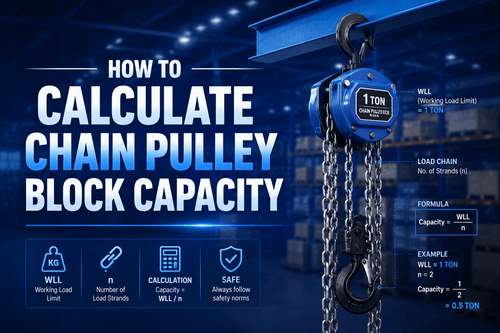
When lifting heavy loads in factories, warehouses, construction sites, and workshops, choosing the correct chain pulley block capacity is essential for safety and efficiency. Whether you’re using a chain pulley 500kg model or a higher-capacity lifting system, understanding load calculations helps prevent accidents, equipment failure, and costly downtime.
What Is Chain Pulley Block Capacity?
The capacity of a chain pulley block refers to the maximum weight it can safely lift under standard operating conditions. Exceeding this limit can damage the equipment and create serious workplace hazards.
Most material handling products are available in capacities ranging from 500kg to several tons, depending on the application.
Factors That Determine Required Capacity
Before selecting a chain pulley block, consider:
- Weight of the load
- Additional lifting accessories
- Dynamic load factors
- Lifting height
- Frequency of use
- Working environment
Always include a safety margin when calculating lifting requirements.
| Factors That Determine Required Capacity | Amount Information |
|---|---|
| Weight of the load | Main load weight to be lifted. |
| Additional lifting accessories | Add the weight of hooks, chains, slings, and other accessories. |
| Dynamic load factors | Extra force caused by movement, starting, or stopping. |
| Lifting height | Required height the load must be lifted. |
| Frequency of use | How often the lifting equipment will be used. |
| Working environment | Conditions such as temperature, dust, moisture, or outdoor use. |
Step-by-Step Capacity Calculation
Step 1: Determine the Load Weight
Identify the exact weight of the machinery, component, or material being lifted.
Example:
Machine Weight = 420kg
Step 2: Add Lifting Accessories
Include the weight of slings, hooks, chains, and attachments.
Example:
Accessories = 30kg
Total Weight = 450kg
Step 3: Apply a Safety Margin
Industry experts typically recommend a safety factor of at least 25%.
Calculation:
450kg × 1.25 = 562.5kg
In this scenario, a chain pulley 500kg would not be suitable. A higher-capacity model should be selected.
| Step | Amount |
|---|---|
| Machine Weight | 420 kg |
| Lifting Accessories | 30 kg |
| Total Weight | 450 kg |
| Safety Margin (25%) | 112.5 kg |
| Required Capacity | 562.5 kg |
Why Capacity Matters
Using the correct chain pulley block helps:
- Improve workplace safety
- Extend equipment lifespan
- Reduce maintenance costs
- Prevent load instability
- Ensure compliance with safety regulations
Common Mistakes When Calculating Capacity
Many businesses make the mistake of:
- Estimating load weight visually
- Ignoring accessory weight
- Selecting the smallest available unit
- Forgetting future lifting requirements
These mistakes can lead to overloading and equipment damage.
| Common Mistakes When Calculating Capacity | |
|---|---|
| 1 | Estimating load weight visually |
| 2 | Ignoring accessory weight |
| 3 | Selecting the smallest available unit |
| 4 | Forgetting future lifting requirements |
Choosing the Right Material Handling Equipment
Modern material handling products are designed for different industrial applications. When selecting a chain pulley block, evaluate:
- Rated load capacity
- Build quality
- Chain strength
- Lift height requirements
- Operating environment
A properly selected chain pulley block improves productivity while maintaining operational safety.
Conclusion
Calculating chain pulley block capacity is more than simply checking load weight. By factoring in accessories, safety margins, and future operational requirements, businesses can select the most suitable lifting solution. Whether you’re considering a chain pulley 500kg unit or a larger system, proper capacity planning ensures safe and efficient material handling operations.
What happens if a chain pulley block is overloaded?
Overloading can damage components, reduce lifespan, and increase safety risks.
Can I use one chain pulley block for different load weights?
Yes, provided the load never exceeds the rated capacity of the equipment.