
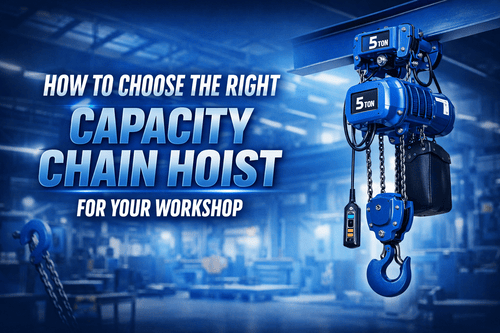
Choose a chain hoist with 25-50% more capacity than your heaviest load. For most workshops, a 1-ton to 3-ton electric chain hoist handles everyday lifting tasks safely and efficiently.
Setting up your workshop with the right lifting equipment isn’t just about buying the biggest machine available. It’s about understanding your actual needs and making a smart choice that keeps your work smooth and safe.
Understanding Your Workshop’s Lifting Needs
Before you start shopping for material handling products, take a good look around your workspace. What are you actually lifting? A small fabrication shop might only need to move metal sheets and toolboxes, while an automotive workshop regularly hoists entire engines.
Make a list of the heaviest items you lift regularly. Include everything from raw materials to finished products. Don’t forget those occasional heavy loads that come up a few times a year. This simple exercise gives you a clear picture of what capacity you really need.
The Golden Rule: Never Max Out Your Hoist
Here’s something many workshop owners learn the hard way – never choose a hoist that exactly matches your heaviest load. Always go bigger. A good rule of thumb is selecting an electric chain hoist with at least 25% extra capacity beyond your maximum load weight.
Why? Safety, durability, and peace of mind. When you’re constantly running equipment at its limit, you’re wearing it out faster and risking accidents. That extra capacity cushion protects both your investment and your team.
Common Capacity Ranges for Different Workshops
Small workshops and home garages typically work well with 0.5-ton to 1-ton hoists. These handle general maintenance, light fabrication, and most DIY projects without breaking a sweat.
Medium-sized operations like auto repair shops or small manufacturing units usually need 1-ton to 3-ton capacity. This range covers engine removal, heavy machinery parts, and bulk material movement.
Larger industrial facilities often require 3-ton to 5-ton hoists or even bigger. These powerhouses manage substantial loads day in and day out.
Height and Speed Matter Too
Capacity isn’t everything when choosing material handling products. Think about your ceiling height and how high you need to lift loads. A 20-foot lifting height works for most standard workshops, but you might need more or less depending on your building.
Lifting speed is another factor people often overlook. If you’re constantly moving loads, a faster hoist saves valuable time. However, for precision work, slower speeds give you better control.
Electric vs. Manual: Making the Right Call
While manual chain hoists cost less upfront, an electric chain hoist pays for itself quickly in busy workshops. You’ll move loads faster, reduce worker fatigue, and boost overall productivity. For operations lifting loads more than a few times daily, electric is almost always the smarter choice.
Don’t Forget About Future Growth
Your workshop today might be different from your workshop two years from now. Are you planning to expand? Taking on bigger projects? Buying heavier equipment?
Planning ahead means choosing slightly higher capacity now rather than needing to upgrade later. It’s much cheaper to buy the right size once than to replace equipment down the road.
The V-talhoist Difference
At V-talhoist, we understand that every workshop is unique. Our range of electric chain hoists and material handling products covers all capacity needs, from light-duty applications to heavy industrial use.
We’re not just selling equipment – we’re helping you build a safer, more efficient workspace. Our team can guide you through the selection process, ensuring you get exactly what your operation needs.
Final Thoughts
Choosing the right capacity chain hoist comes down to knowing your loads, adding safety margin, and thinking ahead. Take your time with this decision. A well-chosen hoist becomes a reliable partner in your workshop for years to come.
Remember, the cheapest option isn’t always the best value. Invest in quality equipment that matches your needs, and you’ll wonder how you ever managed without it.