
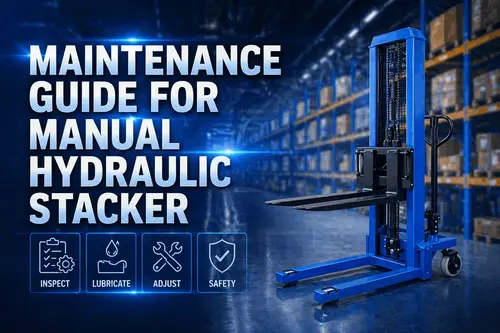
A manual hydraulic stacker works best when it is cleaned, checked, and serviced regularly. Simple daily maintenance can improve safety, reduce repair costs, and increase the life of your equipment.
| Maintenance Task | Recommended Frequency | Why It Matters |
|---|---|---|
| Check hydraulic oil levels | Monthly | Ensures smooth lifting performance |
| Inspect wheels and brakes | Weekly | Improves movement and safety |
| Tighten nuts and bolts | Monthly | Prevents loose parts and accidents |
| Lubricate moving parts | Every 2 weeks | Reduces wear and tear |
| Examine forks for damage | Weekly | Keeps loads stable and secure |
| Clean the stacker body | Daily | Prevents dust buildup and corrosion |
Complete Maintenance Guide for Manual Hydraulic Stacker
A manual hydraulic stacker is an essential tool for lifting, moving, and stacking heavy materials in warehouses, factories, and storage spaces. Like all important equipment, it needs regular care to work properly and safely. Good maintenance not only extends the life of your stacker but also improves daily productivity.
For businesses that rely on dependable material handling products, proper upkeep can prevent costly downtime and unexpected breakdowns.
1. Perform Daily Visual Checks
Before using your stacker each day, inspect it carefully. Look for oil leaks, damaged wheels, worn forks, or loose handles. Even small issues can become serious problems if ignored.
Daily checks help you:
- Spot damage early
- Prevent accidents
- Maintain smooth operations
A quick inspection takes only a few minutes but can save significant repair expenses later.
2. Keep It Clean
Dust, dirt, and debris can affect performance over time. Clean the body, forks, wheels, and hydraulic components regularly.
Use:
- A dry cloth for dust
- Mild cleaner for grease
- Soft brush for hard-to-reach areas
Avoid excessive water near hydraulic systems, as moisture may lead to rust or internal damage.
3. Monitor Hydraulic Oil
Hydraulic oil powers the lifting system. Low or dirty oil can reduce lifting power and damage internal parts.
Important tips:
- Check oil levels monthly
- Use manufacturer-recommended hydraulic oil
- Replace contaminated oil immediately
- Watch for leaks around seals and cylinders
Maintaining proper oil condition ensures smooth and reliable lifting.
4. Lubricate Moving Components
Friction causes wear on wheels, axles, chains, and lifting mechanisms. Regular lubrication keeps parts moving freely.
Apply grease or lubricant to:
- Wheel bearings
- Lift chains
- Pivot points
- Brake systems
This simple step reduces strain and improves efficiency.
5. Inspect Wheels and Brakes
Wheels carry heavy loads every day, so they must remain in good condition. Damaged wheels can affect mobility and safety.
Check for:
- Cracks
- Uneven wear
- Flat spots
- Brake responsiveness
Replace worn wheels immediately to avoid workplace accidents.
6. Tighten Fasteners and Hardware
Constant use can loosen bolts, nuts, and structural parts over time. Regular tightening helps maintain equipment stability.
Pay attention to:
- Fork attachments
- Handle joints
- Wheel assemblies
- Mast structure
Loose components can lead to poor performance or dangerous failures.
7. Train Operators Properly
Even the best-maintained equipment can fail if used incorrectly. Proper training is essential.
Operators should know:
- Safe load limits
- Correct lifting procedures
- Routine maintenance basics
- Emergency handling
Safe usage directly supports long-term durability.
8. Schedule Professional Servicing
While daily and monthly checks are helpful, professional servicing ensures deeper mechanical issues are addressed.
Annual servicing can include:
- Hydraulic system inspection
- Seal replacements
- Structural checks
- Full safety evaluations
Professional care keeps your equipment aligned with industrial safety standards.
Final Thoughts
Proper maintenance of your manual stacker is a smart investment for any business. With regular cleaning, lubrication, inspections, and operator care, your equipment can deliver reliable performance for years.
For companies using trusted material handling products, consistent maintenance supports smoother operations, safer workplaces, and better long-term savings. V-Talhoist understands that quality equipment performs best when paired with smart maintenance habits.
What oil is used in a hydraulic stacker?
Manufacturer-approved hydraulic oil should always be used.
Why is my hydraulic stacker lifting slowly?
Low hydraulic oil, leaks, or worn components are common causes.