
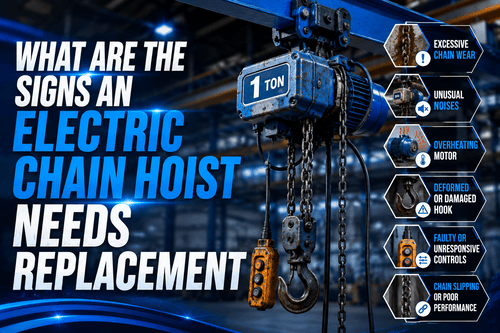
An electric chain hoist is a critical lifting solution used across manufacturing facilities, warehouses, workshops, and construction sites. Like all lifting equipment, it experiences wear over time. Recognizing the warning signs early can prevent unexpected downtime, safety hazards, and costly repairs.
If your facility uses an electric chain hoist or a geared trolley hoist, understanding when replacement is necessary is essential.
Why Timely Replacement Matters
A failing hoist can lead to:
- Workplace accidents
- Reduced lifting performance
- Production delays
- Increased maintenance costs
- Equipment damage
Regular inspections help identify issues before they become serious problems.
1. Frequent Mechanical Breakdowns
One of the clearest signs that an electric chain hoist may need replacement is recurring mechanical failures.
Warning signs include:
- Repeated repairs
- Unexpected shutdowns
- Difficulty lifting loads
- Inconsistent operation
If repair costs continue to increase, replacement may be more economical.
2. Excessive Chain Wear
The lifting chain is one of the most important components of an electric chain hoist.
Watch for:
- Elongated chain links
- Corrosion
- Cracks
- Uneven wear patterns
Severe chain deterioration can compromise lifting safety.
3. Reduced Lifting Performance
If the hoist struggles to lift loads it previously handled with ease, internal wear may be affecting performance.
Common indicators include:
- Slower lifting speed
- Reduced load capacity
- Jerky movement
- Unusual vibration
4. Motor Problems
The motor is the heart of an electric chain hoist.
Signs of motor failure include:
- Overheating
- Burning smells
- Frequent tripping
- Excessive noise
Persistent motor issues often indicate the hoist is nearing the end of its service life.
5. Structural Damage
Inspect the hoist body, hook assembly, and frame regularly.
Look for:
- Cracks
- Bent components
- Deformation
- Corrosion damage
Structural deterioration should never be ignored.
6. Worn Geared Trolley Components
Facilities using a geared trolley hoist should monitor trolley performance closely.
Warning signs include:
- Difficult movement along beams
- Wheel wear
- Alignment issues
- Increased operating resistance
Worn trolley components can affect load stability and operational safety.
7. Outdated Equipment
Older hoists may no longer meet modern efficiency and safety standards.
Upgrading to newer equipment can provide:
- Better load control
- Improved energy efficiency
- Enhanced safety features
- Lower maintenance requirements
Repair or Replace?
Replacement is often the better option when:
- Repairs become frequent
- Parts are difficult to source
- Downtime impacts productivity
- Safety concerns increase
A professional inspection can help determine the most cost-effective solution.
Conclusion
Recognizing the warning signs of a failing electric chain hoist helps businesses avoid operational disruptions and safety risks. Whether the issue involves worn chains, motor problems, structural damage, or geared trolley hoist wear, proactive replacement planning ensures reliable lifting performance and long-term productivity.
Can a geared trolley hoist be repaired?
Minor issues can often be repaired, but extensive wear may justify replacement.
When should I replace an electric chain hoist instead of repairing it?
If repair costs are increasing and reliability is declining, replacement is usually the better long-term investment.