
If you work anywhere near a warehouse, workshop, construction site, or shipyard, you already know how much quiet, unglamorous work a chain pulley block does. It hangs there day after day, lifting loads that would otherwise need three or four people and a lot of luck. Nobody really notices it — until it starts making a noise it shouldn’t, or worse, until it fails.
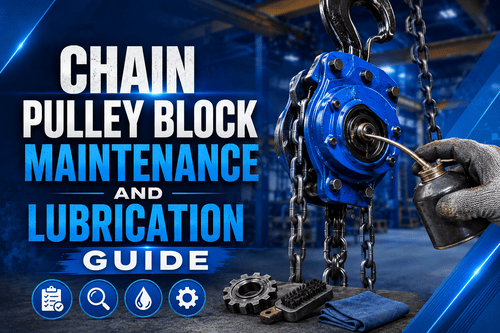
The good news is that a chain pulley block is one of the easiest pieces of lifting equipment to keep in good health, if you actually maintain it on a schedule instead of waiting for something to go wrong. This guide walks through exactly how to do that: what to inspect, how often, what to lubricate and with what, and the small habits that separate a hoist that lasts fifteen years from one that fails in three.
Why Maintenance Matters More Than People Think
A chain pulley block is a simple machine, but “simple” doesn’t mean “maintenance-free.” It’s a system of load chains, gears, brakes, and hooks working together under repeated stress. Every lift puts strain on the same few components — the chain links, the gear teeth, the brake discs, the hook bearing. Over time, friction, dust, moisture, and load cycling wear these parts down.
Skip maintenance long enough and you don’t just get a squeaky hoist. You get chain elongation, brake slippage, gear wear, and in the worst cases, dropped loads. Most workplace lifting incidents involving chain hoists trace back not to a manufacturing defect but to a maintenance gap — a chain that was never inspected, a brake that was never adjusted, a lubrication schedule that quietly stopped happening.
The fix isn’t complicated. It just needs to be consistent.
Daily Checks: The 5-Minute Habit
Before a chain pulley block goes into service each day, a quick visual and functional check catches most problems early:
- Look at the load chain for kinks, twists, cracked links, or visible corrosion.
- Check the hook for any signs of deformation or a bent throat opening — a stretched hook is a warning sign, not a cosmetic issue.
- Test the brake by lifting a small load a few inches and confirming it holds without drift.
- Listen for grinding, clicking, or unusual resistance while operating the hand chain or lever.
- Check chain guides and sprockets to make sure the chain is running smoothly without jumping or binding.
None of this takes long, but it’s the single habit that prevents most surprises down the line.
Weekly and Monthly Inspection Routine
Beyond the daily glance, a more thorough inspection should happen weekly or monthly depending on how hard the hoist is being used.
Chain wear measurement. Measure a section of the load chain against the manufacturer’s specified pitch. If elongation exceeds the allowable limit (usually around 2-3%, though this varies by manufacturer), the chain needs replacing — not repairing, replacing.
Gear housing inspection. Open the gear case periodically and look for metal shavings in the grease, which indicate abnormal gear wear. Clean grease should look clean; if it’s gritty or discolored, it’s time for a change.
Brake system check. The braking mechanism is what stops a load mid-air, so it deserves special attention. Inspect brake linings for glazing or excessive wear, and check that the brake engages smoothly without jerking or delayed response.
Hook and bearing inspection. Rotate the hook and feel for smoothness. A hook that doesn’t swivel freely usually means the thrust bearing needs lubrication or replacement.
Bolts and fasteners. Vibration from repeated lifting loosens fasteners over time. A quick torque check on housing bolts and chain guide fasteners prevents rattling parts from becoming missing parts.
Lubrication: The Part Everyone Underestimates
Lubrication is where most maintenance shortcuts happen — and where they cause the most damage. A chain pulley block has several distinct lubrication points, and each one needs a slightly different approach.
Load Chain Lubrication
The load chain should be lubricated regularly, especially at the pin joints between links where friction is highest. A good practice is to apply lubricant while the chain is slack and moving slowly, so it works its way into the joints rather than just coating the surface.
Use a lubricant designed for chain applications — something with good penetration and adhesion, ideally one that doesn’t attract dust and grit. Avoid using thick grease directly on the chain, since it tends to sit on the outside of the links rather than reaching the internal wear points, and it collects abrasive particles that accelerate wear instead of preventing it.
Gear Case Lubrication
The internal gear train needs a proper gear oil or grease as specified by the manufacturer — this is not the place to improvise. Under-lubrication causes gear tooth wear and premature failure; over-lubrication can cause overheating and seal leakage. Follow the recommended grease type and quantity, and replace it fully at the intervals specified rather than just topping it up indefinitely.
Bearings and Pivot Points
Hook bearings, trolley wheels (if fitted), and any pivot points on the suspension should get a light coating of bearing grease during each maintenance cycle. These points take a lot of directional stress, and dry bearings are one of the most common causes of stiff, jerky hook rotation.
A Simple Rule of Thumb
If the hoist is used daily in a demanding environment — dusty, humid, or outdoors — lubricate more frequently than the standard schedule suggests. If it’s used lightly indoors, the manufacturer’s default interval is usually fine. When in doubt, slightly more frequent lubrication is far safer than under-lubricating and hoping the schedule was conservative enough.
Storage and Environmental Considerations
How a chain pulley block is stored between uses matters almost as much as how it’s used. Moisture is the enemy of both the chain and the internal gear components. If the hoist operates in a humid, coastal, or outdoor environment, corrosion-resistant chain and more frequent lubrication checks become essential — not optional extras.
When a hoist won’t be used for an extended period, it’s worth applying a slightly heavier protective coating to the chain and hook, and covering the unit to keep dust and moisture out.
Signs It’s Time to Call a Professional
Routine maintenance can be handled in-house with a trained operator, but certain signs mean it’s time to bring in a qualified technician:
- The brake slips or doesn’t hold a load reliably
- Chain elongation is near or past the allowable limit
- Unusual noise persists after lubrication
- The hook shows any visible deformation
- Gear case grease shows metal contamination
Pushing a hoist past these warning signs to “get one more job done” is exactly how minor issues become expensive, or dangerous, ones.
Building a Maintenance Schedule That Actually Sticks
The best maintenance program is the one that gets followed, not the most thorough one on paper. A simple, realistic approach usually works better than an elaborate checklist that gets skipped under deadline pressure:
- Daily visual and functional check before first use
- Weekly lubrication touch-up on the load chain
- Monthly full inspection of brake, gears, hook, and fasteners
- Quarterly deep lubrication service on gear case and bearings
- Annual full inspection, ideally by a qualified technician, including load testing
Keeping a simple log — even a notebook by the hoist — helps track when each of these was last done and makes it obvious when something’s overdue.
Final Thoughts
A chain pulley block is built to be dependable, but “built to last” and “will last” are two different things. The gap between them is maintenance — and specifically, lubrication done properly and on schedule. None of the steps above require special expertise or expensive tools. They require consistency.
Treat the daily check as non-negotiable, keep the lubrication schedule realistic for your working conditions, and don’t wait for a warning sign to become a failure before calling in a professional. A well-maintained chain pulley block will quietly do its job for years — which, honestly, is exactly what you want from a piece of lifting equipment.
For chain pulley blocks built with long-term reliability in mind, along with guidance on the right maintenance approach for your specific model, you can explore V-TAL Hoist’s chain pulley block range.
What type of lubricant should I use on a chain pulley block?
Use a lubricant made for chain applications with good penetration into pin joints, rather than a thick surface grease. For the internal gear case, use the gear oil or grease specified by the manufacturer, since the wrong viscosity can cause overheating or inadequate protection.
Can I use regular grease on the load chain?
It's not recommended. Thick grease tends to coat the outside of the chain links rather than penetrating the internal joints, and it attracts dust and grit that accelerate wear instead of preventing it.
How do I know if my chain pulley block's load chain needs replacing?
Measure the chain's pitch against the manufacturer's original specification. If elongation exceeds the allowable limit — typically around 2-3%, though this varies by model — the chain should be replaced rather than repaired.
Why is my chain pulley block's hook not rotating smoothly?
A stiff or jerky hook rotation usually points to a dry or worn thrust bearing. Applying bearing grease during routine maintenance usually resolves this; if the problem persists, the bearing may need replacing.
How often should a chain hoist be fully inspected?
A monthly inspection covering the brake, gears, hook, and fasteners is a good routine minimum, with a more thorough annual inspection — ideally by a qualified technician, including load testing — on top of that.
What are the warning signs that a chain pulley block needs professional servicing?
Brake slippage, chain elongation near the allowable limit, persistent unusual noise after lubrication, visible hook deformation, and metal contamination in the gear case grease are all signs it's time to call in a technician rather than continue routine use.
Does storage affect chain pulley block maintenance?
Yes. Moisture accelerates corrosion in both the chain and internal gear components, so hoists stored in humid or outdoor conditions need more frequent lubrication checks and, ideally, a protective coating and cover during extended periods of non-use.