
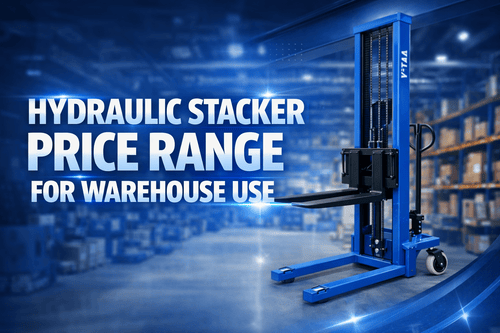
The price of a hydraulic stacker for warehouse use typically ranges from ₹25,000 to ₹2,50,000 depending on type, capacity, and features.
Manual models are cheaper, while electric or semi-electric stackers cost more due to added efficiency and power.
If you manage a warehouse, lifting and moving goods efficiently is a daily challenge. That’s where a hydraulic stacker becomes a practical solution. It helps you lift, stack, and transport heavy materials without putting pressure on workers.
At V-talhoist, we understand that choosing the right equipment is not just about features—it’s also about budget. So, in this blog, we’ll break down the price range in simple terms so you can make the right decision.
What is a Hydraulic Stacker?
A hydraulic stacker is a lifting tool used in warehouses, factories, and storage units. It works using hydraulic pressure, which allows smooth lifting of heavy loads with less effort.
It is commonly used for:
- Loading and unloading goods
- Stacking pallets
- Moving heavy items across short distances
Price Range Breakdown
The cost of a hydraulic stacker depends on the type, lifting capacity, and build quality. Here’s a simple breakdown:
| Type of Stacker | Price Range (Approx) | Best For |
|---|---|---|
| Manual Stacker | ₹25,000 – ₹60,000 | Small warehouses, light work |
| Semi-Electric Stacker | ₹80,000 – ₹1,50,000 | Medium operations |
| Electric Stacker | ₹1,50,000 – ₹2,50,000+ | Large warehouses, heavy use |
Factors That Affect Price
1. Lifting Capacity
Higher capacity means stronger build and higher cost. A 1-ton stacker will cost less than a 2-ton model.
2. Lift Height
If you need to stack goods at higher shelves, the price increases accordingly.
3. Type (Manual vs Electric)
Manual stackers are budget-friendly but require more effort. Electric ones are easier to use but cost more.
4. Build Quality
Stronger materials and better design increase durability—and price.
5. Brand Value
Trusted brands like V-talhoist focus on quality and long-term reliability, which adds value to your investment.
Which One Should You Choose?
- Small warehouse: Manual stacker is enough and budget-friendly
- Medium warehouse: Semi-electric gives a balance of cost and efficiency
- Large warehouse: Electric stacker saves time and labor
Choosing the right option depends on how often you use it and the weight you handle daily.
Why Invest in a Hydraulic Stacker?
Investing in a good stacker is not just about moving goods—it improves your overall workflow.
Benefits include:
- Saves time and effort
- Reduces risk of injury
- Improves warehouse organization
- Increases productivity
In simple words, it makes your work faster and safer.
Tips Before Buying
- Check your daily load requirement
- Measure your warehouse space
- Decide between manual and electric based on usage
- Always choose a reliable supplier like V-talhoist
Bonus Tips
A hydraulic stacker is a must-have tool for any warehouse looking to improve efficiency. The price can vary based on your needs, but even a basic model can make a big difference in daily operations.
At V-talhoist, we focus on delivering practical and durable solutions that fit your budget. Choosing the right stacker today can save you time, money, and effort in the long run.
Is a manual stacker good for daily use?
Yes, but only for light and occasional work. For heavy use, electric is better.
How do I choose the right stacker?
Check your load weight, lifting height, and daily usage before selecting.