
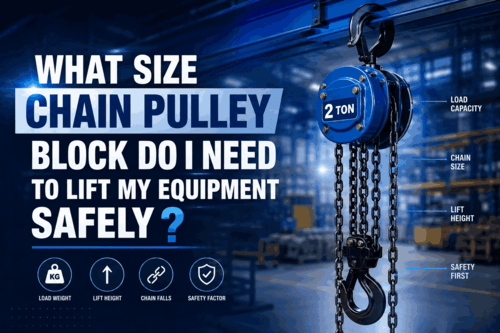
The right chain pulley block size depends on the maximum weight you need to lift, the lifting height required, and the conditions in which the equipment will be used. As a general rule, the chain pulley block should have a rated lifting capacity equal to or greater than the heaviest load you expect to handle. Choosing the correct capacity improves safety, lifting efficiency, equipment lifespan, and operational reliability.
For warehouses, manufacturing facilities, construction projects, and maintenance operations, selecting the proper lifting capacity is one of the most important decisions when purchasing a chain pulley block.
Key Takeaways
- Always choose a chain pulley block rated for your maximum load.
- Consider future lifting requirements before purchasing.
- Lifting height affects chain length requirements.
- Frequent industrial use may require heavier-duty equipment.
- Using the wrong capacity can increase safety risks and maintenance costs.
Decision Guide: Which Capacity Is Right for You?
The correct chain pulley block depends on the weight of the equipment being lifted.
| Load Weight | Recommended Capacity |
|---|---|
| Up to 500 kg | 0.5 Ton Chain Pulley Block |
| Up to 1 Ton | 1 Ton Chain Pulley Block |
| Up to 2 Tons | 2 Ton Chain Pulley Block |
| Up to 3 Tons | 3 Ton Chain Pulley Block |
| Up to 5 Tons | 5 Ton Chain Pulley Block |
| Above 5 Tons | Heavy-Duty Industrial Models |
The final selection should also consider safety requirements, operating conditions, and lifting frequency.
Detailed Explanation
Why Capacity Matters
A chain pulley block is designed to safely lift a specific maximum load. Operating close to or beyond the rated capacity can increase wear, reduce performance, and create unnecessary risks.
Choosing the proper size helps:
- Improve operator safety
- Extend equipment lifespan
- Reduce maintenance requirements
- Improve lifting efficiency
- Minimize operational downtime
Factors That Influence Chain Pulley Block Selection
Maximum Load Weight
The heaviest load you intend to lift should always be the starting point when choosing capacity.
Lifting Height
Higher lifting applications require longer chain lengths and may influence equipment selection.
Frequency of Use
Equipment used daily in industrial environments often requires more robust construction than equipment used occasionally.
Operating Environment
Warehouses, workshops, factories, construction sites, and outdoor locations may have different lifting requirements.
Real-World Example
A manufacturing facility needs to lift a machine component weighing approximately 1.8 tons during routine maintenance.
Although the component weighs less than 2 tons, selecting a 2-ton rated chain pulley block provides the required lifting capacity while supporting safe and efficient operation. The maintenance team should also verify lifting points, working conditions, and applicable safety procedures before use.
Common Mistakes When Choosing a Chain Pulley Block
Choosing Based on Average Load Weight
Many buyers select equipment based on the loads they usually lift instead of the heaviest load they may encounter.
Ignoring Future Requirements
A chain pulley block should support both current and future lifting needs whenever possible.
Overlooking Lift Height
Capacity is important, but insufficient chain length can limit usability.
Focusing Only on Purchase Price
Lower-cost equipment may result in higher maintenance expenses and shorter service life.
Why Choose V-tal Chain Pulley Blocks?
V-tal Chain Pulley Blocks are designed for industrial lifting applications where reliability, durability, and safety are essential. Available in multiple lifting capacities, they are suitable for manufacturing facilities, warehouses, engineering workshops, logistics operations, maintenance projects, and construction environments.
Benefits of V-tal Chain Pulley Blocks include:
- Durable construction
- Smooth lifting performance
- Multiple capacity options
- Industrial-grade reliability
- Suitable for demanding applications
- Long service life with proper maintenance
Related Questions
- How do I choose the right chain pulley block for my application?
- How much does a chain pulley block cost in India?
- Should I buy or rent a chain pulley block for a short-term project?
- Can a chain pulley block be used outdoors in rain and dust?
- How long does a chain pulley block typically last?
Explore V-tal Chain Pulley Blocks
Looking for a chain pulley block for manufacturing, warehousing, construction, maintenance, or material handling applications?
Explore V-tal Chain Pulley Blocks available in multiple lifting capacities and designed to support safe, efficient, and reliable lifting operations.
Is a 2-ton chain pulley block suitable for a 2-ton load?
The equipment should always be operated within the manufacturer’s rated specifications and applicable safety guidelines.
What happens if I choose the wrong capacity?
Incorrect sizing can affect safety, productivity, maintenance costs, and equipment lifespan.
How often should a chain pulley block be inspected?
Inspection frequency depends on operating conditions, usage levels, and workplace safety requirements.